"Kitna time lagega?" — it's the first question almost every client asks, and the one most contractors answer dishonestly. You'll hear "45 days" from builders who know it isn't true. A properly built concrete pool in Karachi takes 10 to 14 weeks from excavation to first swim — and anyone promising much less is planning to skip steps you can't see until they fail.
I've built pools across DHA, Clifton, Gulshan and Bahria Town for years. Here's the honest week-by-week timeline, what happens in each stage, and the real reasons Karachi builds run late — so you can plan around the truth instead of a sales pitch.
The realistic schedule at a glance
| Weeks | Stage | What's happening |
|---|---|---|
| 0–1 | Design, approvals, layout | Final drawings, society/HSC approvals, site marking |
| 1–2 | Excavation | Digging, soil removal, base preparation |
| 3–4 | Steel + plumbing | Rebar cage, pipework, equipment pad prep |
| 4–6 | Shell construction | Shotcrete/concrete shell, curing |
| 6–7 | Curing + waterproofing | Mandatory curing period, waterproofing layers |
| 7–9 | Tiling + coping | Waterline tile, interior finish, coping, deck base |
| 9–10 | Deck + equipment | Deck surfacing, pump/filter/heater installation |
| 10–12 | Startup + balancing | Fill, chemical startup, equipment commissioning |
| 12–14 | Buffer | Inspections, touch-ups, landscaping coordination |
That's the honest version. Now the detail, stage by stage.
Weeks 0–1: Design, approvals, and layout
Before a shovel touches soil, the design must be final: dimensions, depth profile, equipment selection, plumbing routes, and deck layout. Changes made after excavation cost ten times what they cost on paper — finalise the design here.
In Karachi, this stage also includes society approvals. DHA, Clifton Cantonment, and Bahria Town all have their own building-control processes, and a pool addition needs clearance before work starts. This takes anywhere from a few days to three weeks depending on the society and how complete your drawings are. Contractors who "start without the paperwork" put your whole project at risk — insist on written approval before excavation.
The site is then marked out: the pool outline sprayed on the ground, levels established, and access planned for the excavator and the concrete pump.
Weeks 1–2: Excavation
Digging the hole takes 2–5 working days for a standard home pool with a machine, longer for sites with restricted access (many Clifton and DHA streets can't take a full-size excavator, so work goes slower with smaller machines).
Karachi-specific excavation realities:
- High water table (Clifton/Seaview belt): groundwater seeps into the excavation as you dig. It must be pumped continuously, and the shell design needs to account for hydrostatic pressure — a detail inexperienced contractors miss, and the reason some Clifton pools develop "floating" or cracked shells.
- Rock and hard strata: parts of Gulshan and the northern areas hit rock that needs breaking, adding days and cost.
- Soil disposal: excavated soil has to go somewhere. In dense neighbourhoods, removal trucks must be scheduled — and Karachi's truck timings and dumping rules add their own friction.
Weeks 3–4: Steel reinforcement and plumbing
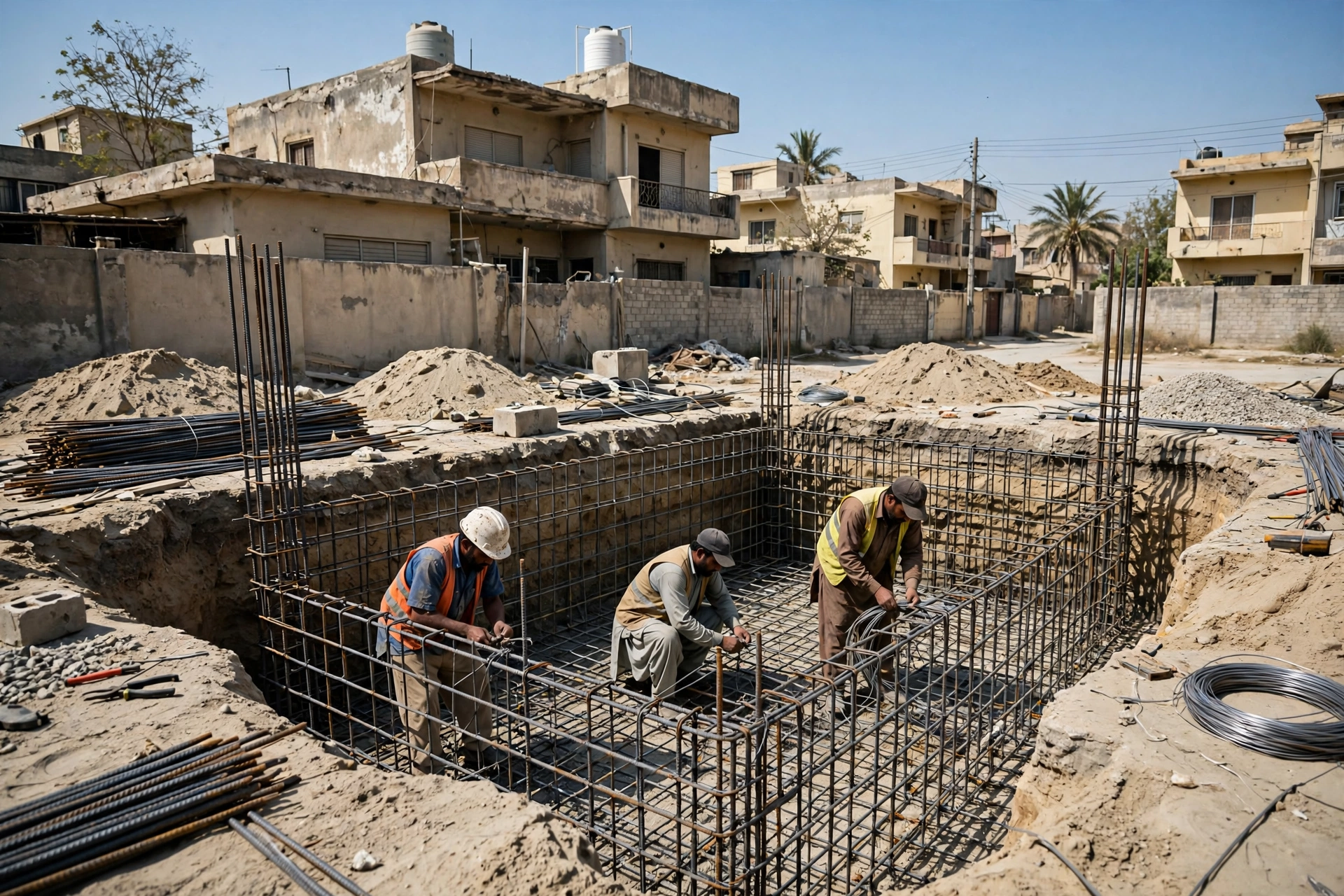
This is the skeleton stage, and it's where build quality is truly decided. The rebar cage is tied to the engineer's specification — bar spacing, overlap lengths, and the bond beam (the thickened structural ring around the pool's top edge) all matter. A proper steel inspection happens here; if your contractor resists an independent check of the steel, that's a red flag (our contractor selection guide covers vetting in detail).
Plumbing goes in before the shell: skimmer lines, main drains, returns, the equipment pad pipework, and conduits for lights. Every pipe is pressure-tested before concrete is poured — a leak found now costs hundreds of rupees to fix; found after the shell, it costs lakhs. (For what leaks cost to fix later, see our leak detection and repair guide.)
Weeks 4–6: The concrete shell
The shell is sprayed (shotcrete/gunite) or hand-packed concrete, typically 15–20 cm thick. This is specialist work — the nozzleman's skill decides the shell's density and strength. A rushed or poorly mixed shell is the single most common cause of structural cracks I get called to repair years later.
After spraying comes curing — and this is the stage contractors are most tempted to shorten. Concrete gains strength over 28 days; it must be kept moist for at least the first 7–14. In Karachi's summer heat, an uncured shell dries too fast and develops shrinkage cracks before the pool ever holds water. The 45-day builders skip this. Don't let yours.
Weeks 6–7: Waterproofing
With the cured shell comes waterproofing — cementitious coatings or membrane systems applied to the interior before tiling. This is Karachi's monsoon insurance: groundwater pressure from outside and pool water from inside both attack the shell, and waterproofing is the barrier. Common failures I repair trace back to a single skipped coat or waterproofing applied to a dusty, unprepared surface. (The full catalogue of errors is in our waterproofing mistakes guide.)
Budget 5–7 working days: surface prep, two coats with curing time between them, and flood testing.
Weeks 7–9: Tiling, coping, and interior finish
Waterline tile, step markers, and the interior finish (tiles or plaster — compared in our plaster vs tiles guide) go on now. Tiling a standard pool takes 7–10 working days with a good team; intricate mosaic work takes longer.
Coping — the edge capping — is set as the deck levels are established. Getting coping and deck levels right is fiddly, precise work; it's also what your eyes judge every day for the next twenty years, so it shouldn't be rushed (options compared in our coping guide).
Weeks 9–10: Deck and equipment installation
The surrounding deck (materials compared in our deck options guide) is laid, and the equipment goes in: pump, filter, chlorinator or salt system, heater if specified, and lights. Equipment sizing for Karachi conditions is its own discipline — our equipment guide covers pump and filter selection honestly.
Electrical work must be done by a qualified electrician with proper earthing and GFCI/RCD protection — pool electrics done casually kill people. This is non-negotiable.
Weeks 10–12: Fill, startup, and balancing
The pool is filled (see our guide to filling costs and water options in Karachi — budget the tanker bill into the project), and the chemical startup begins. A new plaster or tile pool needs a careful startup sequence over 2–4 weeks: brushing, pH management, and gradual chlorine introduction. The contractor should hand over with balanced water and a written maintenance briefing — not a green pool and a shrug.
Equipment is commissioned and tested: flow rates checked, the heater fired, lights sealed and tested, automation programmed.
What actually delays Karachi pool builds
The 10–14 week schedule assumes competent management. These are the real delay causes I see:
- Society approvals — the single biggest wildcard. Budget three weeks; celebrate if it's one.
- Monsoon (July–September) — excavation in heavy rain is dangerous and pointless; shells can't be sprayed in downpours. Starting a build in August without a weather plan is asking for a two-month slip.
- Material price/supply swings — cement, steel and imported equipment prices move; a contractor who under-quoted may stall waiting for cheaper rates.
- Design changes mid-build — moving a step or resizing after the steel is tied costs weeks, not days.
- Ramadan and Eid slowdowns — labour availability drops; plan around it.
- The "45-day" contractor — the delay you avoid by not hiring them: rework when skipped steps fail inspection or fail outright.
How to keep your build on schedule
- Finalise the design before excavation. Every change after steel costs time exponentially.
- Get society approvals in writing first. Verbal "ho jayega" is not an approval.
- Agree stage payments tied to completed stages — excavation, steel, shell, tiling, handover — not calendar dates. This aligns the contractor's incentive with actual progress.
- Ask for a weekly photo update. A contractor confident in their work sends them without being asked.
- Don't start in peak monsoon unless the contractor shows you a real weather-contingency plan.
Frequently asked questions
How long does it take to build a swimming pool in Karachi?
10–14 weeks for a standard concrete pool: excavation, steel, shell, curing, waterproofing, tiling, deck, equipment, and startup. Fiberglass installations are faster (3–5 weeks) but concrete remains the Karachi standard — see our fiberglass vs concrete comparison.
Can a pool be built in 45 days?
Not properly. The curing and waterproofing stages alone need 3–4 weeks combined. A 45-day build skips curing time, waterproofing coats, or proper plumbing testing — the three things whose absence shows up as cracks and leaks within two years.
What is the best month to start pool construction in Karachi?
October–February. Cooler weather is kinder to concrete curing, there's no monsoon risk, and the pool is ready for the March–June swimming season. Starting in October also means tanker water for the first fill is cheaper (off-season rates).
How much does pool construction cost in Karachi?
A standard home concrete pool typically runs around Rs 30 lakh all-in. Our construction cost guide breaks down where the money goes.
Do I need DHA/Clifton approval to build a pool?
Yes — DHA, Clifton Cantonment, and Bahria Town all require building-control clearance for pool additions. Allow up to three weeks and get it in writing before excavation starts.
Start with a realistic plan, not a rushed promise
The Pool Guy builds concrete pools across Karachi on honest timelines — 10–14 weeks, stage-payment contracts, weekly photo updates, and a proper chemical startup at handover. Call or WhatsApp +92 321 2077638 (Mon–Sat, 9 AM–6 PM) for a site visit and a written stage-by-stage schedule. We're at 22 Dr Ziauddin Ahmed Rd, Civil Lines, Karachi — see our services, gallery and products.
Leave a Reply