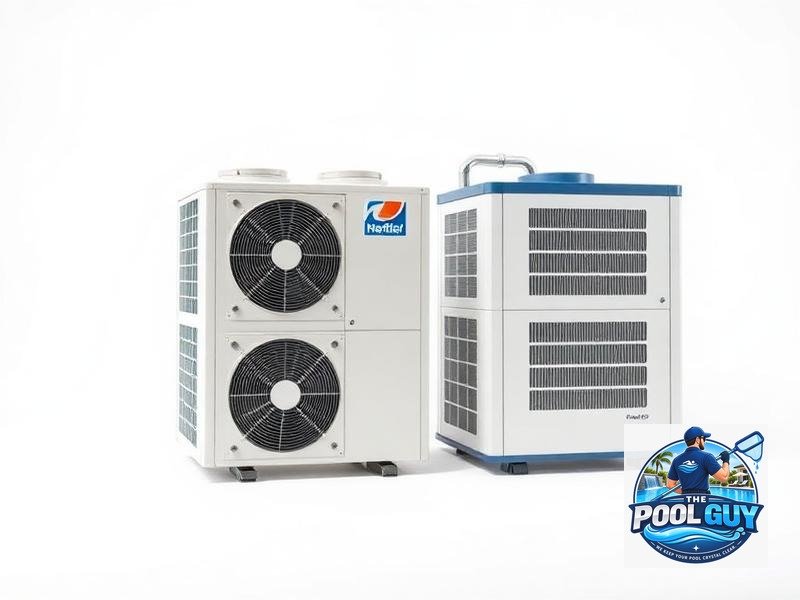
Every December, the same thing happens: a client in DHA or Clifton calls because their kids won't touch the pool — the water is too cold. And every January, someone asks me to install a pool heater, convinced it will give them warm water all winter.
The honest answer: most Karachi pool owners do not need a pool heater — and those who do usually pick the wrong type. In December and January, an uncovered outdoor pool here drops to about 16–19°C. So the real question is whether you want to pay to swim for those 6–8 coldest weeks. That's the window a heater buys you — keep that in mind before spending lakhs.
How Cold Does a Karachi Pool Actually Get?
Pool water lags air temperature: even when a January afternoon hits 24–26°C, the water has been losing heat all night (January nights drop to 10–13°C), and dry winter air plus the evening sea breeze steal heat through evaporation around the clock.
What I see every winter across the pools we maintain:
- October–November: 24–28°C, comfortable, no heating needed.
- December–January: 16–19°C, too cold for most swimmers, especially children.
- February: climbs back to 20–23°C; brave swimmers return.
- March–September: 27–32°C, nobody thinks about heaters.
Option 1: Gas Pool Heaters
A gas heater burns Sui gas (or LPG) to heat water as it flows through — same principle as your home geyser, but far bigger. Flip it on and pool temperature climbs several degrees within hours.
The honest Karachi problems:
Gas shortages hit hardest exactly when you need the heater. Every Karachi homeowner knows the pattern: Sui Southern gas pressure collapses in winter, especially December and January. In parts of DHA and Gulshan-e-Iqbal, morning pressure is so low that geysers barely work. Your pool heater runs on the same line — a gas heater with no gas in January is an expensive decoration.
Running costs are high. Heating a typical 25,000–30,000 gallon home pool by even 5°C costs thousands of rupees in gas per session — budget honestly for winter gas bills that will shock you.
Who gas suits: hotels, clubs, and farmhouses needing on-demand heating for events, usually with commercial gas connections or LPG backup. For a private family pool, I recommend it least.
Option 2: Solar Pool Heating
Water is pumped through dark roof panels, the sun warms it, and it returns to the pool a few degrees warmer. No fuel, no gas, no big electricity bill — just the pump running during sunny hours.
Why solar suits Karachi: we get sunshine even in December and January — while Lahore and Islamabad sit under winter smog, we get clear, bright days with strong midday sun. On a sunny January afternoon, a properly sized array can lift pool water 3–5°C: the difference between "too cold" and "swimmable."
The honest limitations: solar only heats while the sun is on the panels (roughly 10 AM–4 PM in winter), so the pool gets *swimmable*, never bath-warm. Panels need roughly 50–80% of the pool's surface area in clear sun — a rooftop pool with limited terrace may not have it. And Karachi's dust coats everything: hose panels down every few weeks or output drops.
Cost (2026): Rs 4–9 lakh installed for a standard home pool, depending on size, panel quality, and roof plumbing. Running cost is essentially zero beyond electricity your pump already uses.
Option 3: Heat Pumps
A heat pump works like a reverse air conditioner, pulling heat from outside air into the pool water — 4–6 units of heat per unit of electricity, far more efficient than electric resistance heating.
The honest Karachi problems:
They weaken in cold air. Heat pumps extract heat *from the air* — when January nights drop to 10–13°C, efficiency falls exactly when you need heat most. The unit runs constantly, and the electricity bill follows.
Pakistani electricity tariffs are brutal. Running one 8–10 hours a day on KE's high-slab residential rates gets expensive fast — the "efficient" label doesn't survive our tariffs. Do the maths on your actual slab before buying.
Sea air eats them. Heat pumps have exposed coils and fans. In Clifton and DHA Phase 8, salt-laden air corrodes outdoor equipment aggressively — a unit rated for 10–12 years lasts noticeably less near the coast unless marine-coated and maintained.
Who heat pumps suit: indoor pools — hotels, apartment buildings, farmhouse indoor facilities — where surrounding air stays warm, the unit sits protected, and the owner can stomach the electricity bill.
Side-by-Side Comparison (Karachi, 2026)
| Factor | Gas heater | Solar heating | Heat pump |
|---|---|---|---|
| Upfront cost (home pool) | Rs 6–12 lakh | Rs 4–9 lakh | Rs 8–15 lakh |
| Monthly winter running cost | Rs 25,000–60,000+ (gas) | Near zero | Rs 30,000–70,000+ (electricity) |
| Warm-up speed | Fastest — hours | Slow — over sunny days | Medium — steady over a day |
| Works during winter gas load shedding | No | Yes | Yes |
| Works on cloudy winter days | Yes | Poorly | Reduced efficiency |
| Realistic winter gain | 5–10°C on demand | 3–5°C on sunny days | 4–7°C with long run times |
| Best for | Hotels/clubs, event heating | Karachi home pools | Indoor pools, sheltered sites |
My Honest Recommendation for Karachi Homeowners
When a client in DHA, Bahria Town, or PECHS asks how to swim through winter, here's what I actually tell them, in order:
1. Buy a solar pool cover first. The cheapest win, and most people skip it. A bubble-style solar cover floats on the water, traps the day's heat, and cuts night-time heat loss — often 3–4°C of retained warmth by itself. It also cuts evaporation, which in Karachi's dry winter saves real top-up water. A fraction of any heater's cost.
2. Add solar panels if you have the roof. Cover + panels is the sweet spot for Karachi. The cover holds the heat; the panels add it. Together they can keep a pool swimmable through most of December and January on sunny days — with zero fuel cost. This is what I recommend to nine out of ten homeowners who ask.
3. Consider gas only for commercial facilities. Hotels, clubs, farmhouses hosting winter events — where the pool must be warm *this Saturday* regardless of sunshine. Check your area's winter gas pressure before buying.
4. Skip the heat pump for outdoor Karachi pools. Tariffs, cold-night efficiency loss, sea-air corrosion — the brochure maths doesn't survive our reality.
And the most honest advice of all: try the solar cover for one winter before spending lakhs. If you're building new and might heat later, tell your contractor now — running extra plumbing sleeves during construction costs almost nothing; retrofitting them later costs a fortune.
Frequently Asked Questions
Is pool heating worth it in Karachi?
For most homeowners, no — a solar cover costing a fraction of a heater delivers most of the benefit. Heating is worth it for year-round swimmers (training, physiotherapy) or commercial facilities where guests expect warm water in winter.
What does a pool heater cost to run per month in winter?
Rough 2026 figures for a typical home pool: gas Rs 25,000–60,000+ per month of regular use (when gas pressure cooperates); heat pump Rs 30,000–70,000+ in electricity; solar near zero. Let running costs — not the upfront price — drive your decision.
Can I heat my pool with solar only?
Yes, with the right expectations: panels plus a cover can hold water in the low-to-mid 20s°C through December and January's sunny stretches. You won't get 28°C bath water from solar alone in January — anyone promising that is selling, not advising.
What's the best heater for a DHA farmhouse pool?
Farmhouses are the one residential case where I sometimes recommend gas: large pools, occasional winter events, owners who want the pool warm on a specific date and can absorb the gas bill. But verify your winter gas pressure first — several DHA and farmhouse-belt areas get the worst seasonal drops. If pressure is unreliable, solar with a cover is the fallback that actually works.
How long does a heat pump last in Karachi's sea air?
Near the coast (Clifton, DHA Phase 8): expect 5–8 years from a standard unit without marine-grade coating. Inland (Gulshan-e-Iqbal, Bahria Town, North Nazimabad): 8–12 years with basic maintenance. Halve brochure lifespans for seaside installs unless the unit is specifically marine-rated.
Get Honest Advice Before You Spend
A pool heater is a five-to-fifteen-lakh decision you'll live with every winter. Get a contractor who'll tell you when you *don't* need one — and size it properly when you do.
The Pool Guy — swimming pool construction, renovation, equipment, and maintenance across Karachi.
- Phone/WhatsApp: +92 321 2077638
- Address: 22 Dr Ziauddin Ahmed Rd, Civil Lines, Karachi
- Hours: Mon–Sat 9 AM–6 PM, Sunday closed
Want swimmable water without the guesswork? See our pool services, browse real Karachi projects in our gallery, and check pool equipment and products. Call or WhatsApp for an honest assessment of whether your pool even needs heating — if a solar cover will do the job, we'll tell you that instead of selling you a heater.
Leave a Reply