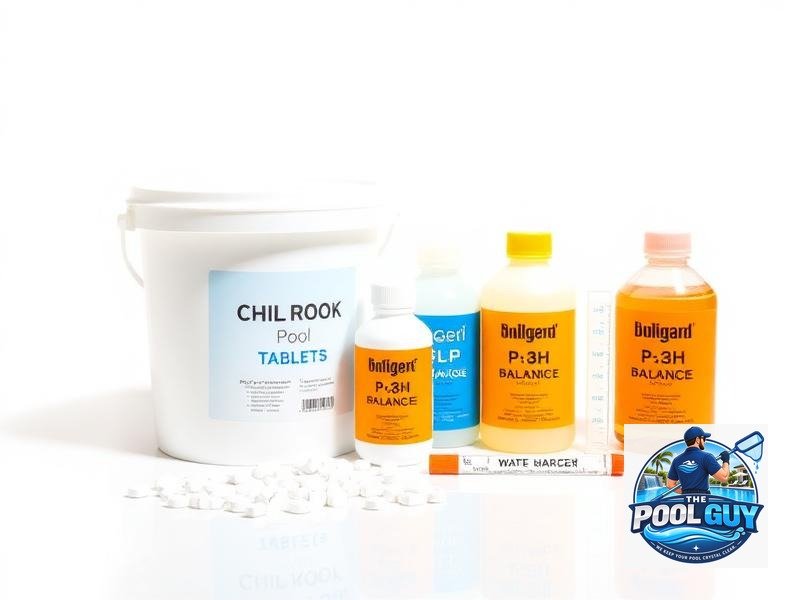
The most common complaint I hear from new pool owners in Karachi isn't about construction — it's this: "Bhai, paani green ho gaya hai" or "the water stings our eyes." Almost every time, the construction is fine. The problem is chemical balance. Most new owners dump in a bag of chlorine, hope for the best, and panic when the water turns cloudy.
Pool chemistry is simpler than it looks: understand five numbers, test twice a week, and follow a 15-minute routine — the same way I teach every new client across DHA, Clifton, Gulshan, and Bahria Town.
Why Balance Matters
Unbalanced water damages three things. Swimmers: wrong pH burns eyes and itches skin; too little chlorine lets bacteria and algae thrive (the green water); too much irritates throats and bleaches swimwear. Pool surface: low pH eats plaster and grout; high pH plus Karachi's hard water lays white scale on tiles and the waterline. Equipment: acidic water corrodes metal fittings; hard, alkaline water scales up filters and heaters until they die early. A replacement pump costs Rs 80,000–150,000 in Karachi (2026). A balanced pool is simply cheaper to own.
The 5 Key Parameters (Explained Simply)
1. pH — The Most Important Number
pH measures how acidic or alkaline your water is (0–14 scale). Ideal: 7.2–7.6. Treat pH as the control knob — when it drifts, chlorine stops working and everything follows. Below 7.0, water stings eyes, etches plaster, and corrodes metal. Above 7.8, chlorine loses its punch, water clouds, and scale forms. Karachi reality: most bore-well and tanker water arrives at pH 7.8–8.5, so nearly every new owner starts high and must bring it down with pH reducer (dry acid/sodium bisulphate).
2. Free Chlorine — The Sanitizer
The chlorine available to kill germs and algae. Ideal: 1.0–3.0 ppm. Below 1 ppm you have no protection — algae blooms in 48 hours in Karachi's heat; above 5 ppm the water irritates eyes and smells strongly. Chlorine gets used up daily by sun, swimmers, and heat, so steady small doses beat occasional big shocks.
3. Total Alkalinity (TA) — The pH Bodyguard
TA measures resistance to pH swings. Ideal: 80–120 ppm. Low TA means pH bounces every time it rains or you add chemicals — raise it cheaply with sodium bicarbonate (baking soda in the correct dose).
4. Calcium Hardness (CH) — Scale and Etching Control
CH measures dissolved calcium. Ideal: 200–400 ppm. Too low and water turns aggressive, pitting plaster; too high and calcium drops out as white scale. Karachi reality: our water is notoriously hard — bore water in many areas tests 400–600+ ppm from the tap, the top reason new pools in DHA and Bahria Town develop scale-ringed waterlines. Test fill water *before* it goes in.
5. Cyanuric Acid (CYA) — Sunscreen for Chlorine
CYA (stabilizer) shields chlorine from sunlight. Ideal: 30–50 ppm. Critical in Karachi — 10+ hours of summer UV destroys unstabilized chlorine in 2–3 hours. But above 80–100 ppm, CYA "locks" chlorine so it can't sanitize: the classic local trap is buying stabilized tablets weekly until CYA passes 150 and nothing works. Only fix: drain part of the pool.
Quick Reference Table
| Parameter | Ideal range (Karachi) | Fix if low | Fix if high |
|---|---|---|---|
| pH | 7.2–7.6 | pH increaser (soda ash) | pH reducer (dry acid) |
| Free chlorine | 1.0–3.0 ppm | Add chlorine (liquid or granular) | Stop dosing, let sun burn it off |
| Total alkalinity | 80–120 ppm | Sodium bicarbonate | Partial water replacement |
| Calcium hardness | 200–400 ppm | Calcium chloride | Partial water replacement |
| Cyanuric acid (CYA) | 30–50 ppm | Add stabilizer granules | Partial water replacement |
Karachi-Specific Problems Beginners Face
Hard fill water. Bore and tanker water is often 400+ ppm calcium with high pH — test it quarterly, since every top-up changes your numbers.
Monsoon dilution. July–September rains dump soft, acidic water into the pool, dropping pH and diluting chemicals. Retest and rebalance after every heavy rain week.
Dust. Pre-monsoon dust storms load pools with fine dust that eats chlorine and clouds water. Skim daily in dusty months; run the filter 8–10 hrs/day in summer, 6 in winter.
Sun + CYA discipline. Use stabilized tablets only while CYA is under 50 ppm, then switch to liquid chlorine (sodium hypochlorite) for daily dosing. This single habit prevents the most common chemical disaster I see in Karachi homes.
How to Test Your Water (2026 Karachi Prices)
Three options, all available from Karachi pool suppliers in 2026:
- Test strips (~Rs 1,500–3,000 for 50). Dip, wait, match colors. Fast and fine for routine beginner checks; approximate accuracy.
- Drop test kits (~Rs 8,000–15,000). Reagent drops in a water sample against a color chart. More accurate for pH and chlorine — my recommendation for owners who want to do it properly.
- Digital testers (~Rs 25,000–40,000). Electronic pens for pH/ORP. Fast and precise, but need calibration.
Test twice a week in summer (pH + chlorine each time; full check weekly) and once a week in winter — always after heavy rain, heavy use, or bore/tanker top-ups.
Your Weekly Routine: 30×15 ft Pool
For a typical Karachi home pool (~30×15 ft), do this Sunday morning before swimming:
- Skim and empty baskets (5 min) — a clogged basket starves the filter.
- Test (5 min) — pH and free chlorine; full five-parameter test weekly.
- Adjust in order (5 min): alkalinity first, then pH, then chlorine, stabilizer last. Fixing pH before alkalinity won't hold.
- Dose and wait — add chemicals with the pump running at least 2 hours to mix; retest after big corrections.
- Note it down — date, readings, and what you added. After a month you'll see patterns and dosing becomes instinct.
Typical summer dose: roughly 200–400 ml of liquid chlorine per day to hold free chlorine at 1–3 ppm — let your own testing decide the amount.
5 Beginner Mistakes I See Every Summer
- Dumping a whole bag of chlorine at once — weekly mega-doses corrode fittings, spike pH, and build CYA. Little and often wins.
- Ignoring pH, blaming chlorine — at pH 8.2 chlorine barely works; fix pH first, always.
- Only stabilized tablets, forever — CYA creeps up until chlorine stops working. Check CYA monthly.
- Never testing bore/tanker top-ups — every refill changes your numbers.
- Adding chemicals with the pump off — undissolved granules bleach or pit plaster. Run the pump, pre-dissolve granules, add slowly at the deep end.
Storing Chemicals Safely at Home
- Store in a cool, shaded, ventilated spot — never a tin shed hitting 50C. Heat degrades chlorine and makes some chemicals dangerous.
- Keep everything dry — water in a chlorine bucket is the most common cause of home chemical accidents.
- Never mix chemicals — especially chlorine with acids (toxic gas risk). Add one at a time, 15–30 minutes apart.
- Keep chemicals locked away from children and pets. Don't decant into food or drink containers; label everything clearly.
DIY vs Calling a Professional
You can handle the weekly routine yourself — most of my clients do after one training session. Call a professional when: water stays green after a week of correct chemistry (likely a filter/circulation issue); CYA tops 100 ppm or calcium hardness 500 ppm (may need supervised partial water replacement); eyes burn despite "normal" readings (combined chloramines — needs proper shocking); or equipment is scaling.
Professional help costs less than most owners fear: maintenance plans start at Rs 15,000/month.
FAQ
How often should I test my pool water in Karachi?
Twice weekly in summer (pH + chlorine each time, full test weekly), weekly in winter. Always retest after monsoon rains, heavy use, or bore/tanker top-ups.
Why is my pool water green even though I add chlorine?
Usually: pH too high (chlorine can't work), CYA too high from months of stabilized tablets (chlorine "locked"), or the filter isn't running long enough. Check in that order.
Is Karachi bore/tanker water safe for topping up?
Yes, but test it first — it's often hard (400+ ppm calcium) with high pH, pushing pool numbers up over time.
How much do pool chemicals cost per month in Karachi (2026)?
Roughly Rs 5,000–10,000/month in summer (liquid chlorine, pH reducer, occasional stabilizer/alkalinity adjuster), less in winter. Our service plans start at Rs 15,000/month including all chemicals and labour.
Get Your Water Crystal Clear
Still fighting green water, or would rather hand the chemistry to someone who does it daily? The Pool Guy — call or WhatsApp +92 321 2077638. 22 Dr Ziauddin Ahmed Rd, Civil Lines, Karachi; open Mon–Sat 9 AM–6 PM (closed Sundays). Maintenance plans start at Rs 15,000/month — chemicals, testing, and labour included. See service details, real project photos, and pool products.
Leave a Reply