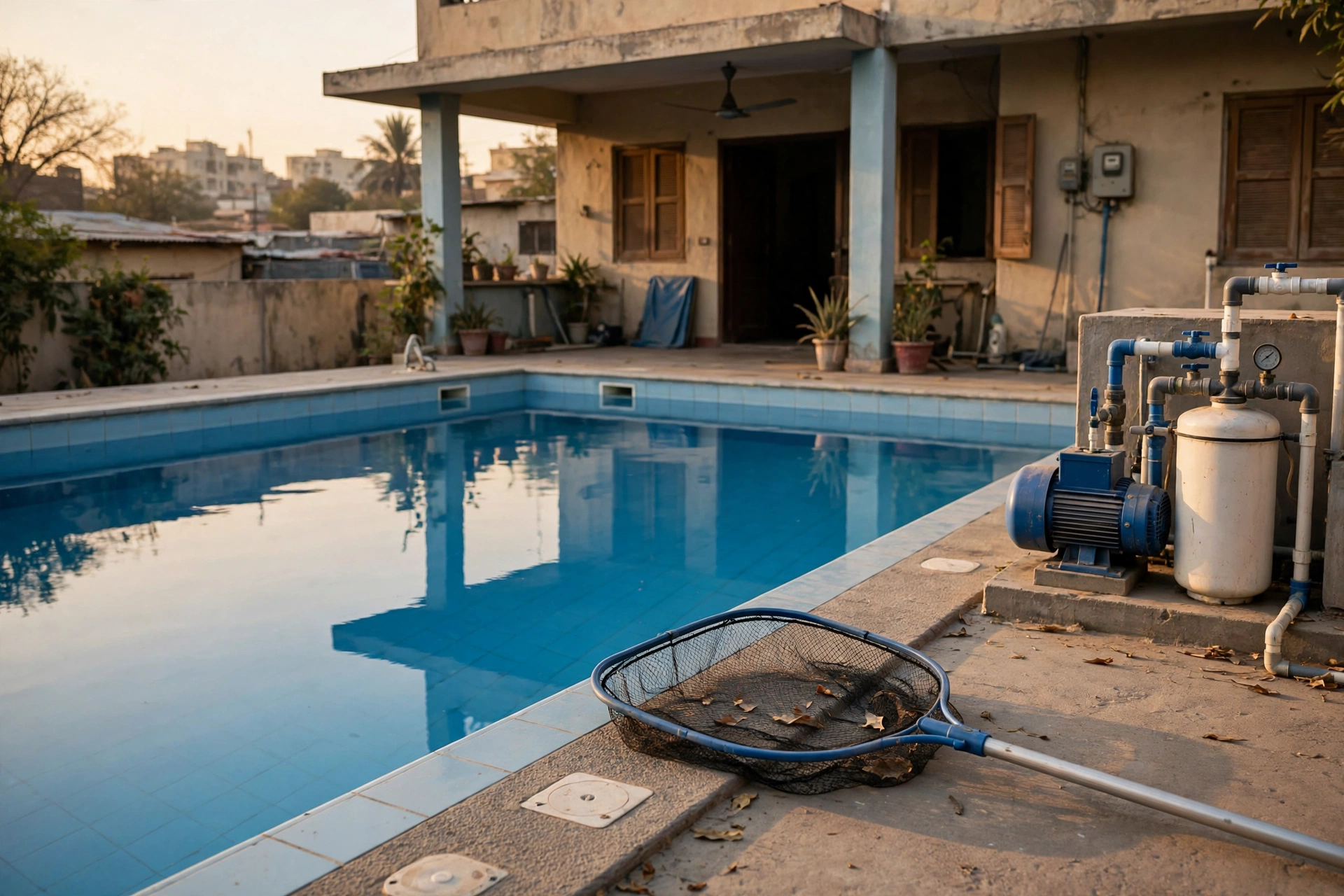
Every Karachi pool owner knows the pattern. The pump is running, the water is clear, and then the lights go out. K-Electric load shedding stops the pump dead, the water goes still, and in Karachi's heat that still water does not stay clean for long. A few hours is usually fine. A full day of cuts in July, with dust in the air and the sun beating down, can turn a clear pool cloudy — and a cloudy pool left alone turns green.
This is not a problem pool owners in cooler countries think about. In Karachi, the pump is the pool's lungs, and load shedding is the city switching those lungs off several times a day. This guide explains what actually happens to your water during a power cut, what to do before, during and after the cut, and the long-term fixes that make the problem go away.
Why a Power Cut Hits Pool Water So Hard
A pool stays clean because water keeps moving. The pump pushes water through the filter, spreads chlorine evenly, and skims dust and leaves off the surface. Stop the pump and three things happen at once.
Circulation stops. Chlorine stops reaching every corner. The deep end, the steps, and the shady side near the wall get no fresh sanitiser at all, and those are exactly the spots where algae starts.
Filtration stops. Karachi's air carries fine dust on most days, and after a windy afternoon the surface of an uncovered pool can be visibly dusty within an hour. With no skimmer running, that dust sinks and feeds the water.
Heat works faster. In May and June, Karachi pool water can sit above 32°C. Warm, still, sunlit water with falling chlorine is the perfect recipe for algae. In winter the same power cut matters far less — cool water buys you time, which is one reason winter pool care is easier all round.
The practical rule from our maintenance visits: a pool can sit without the pump for about 4–6 hours in summer without visible trouble, provided the chlorine was balanced before the cut. Past 8–12 hours of still water in hot weather, cloudiness is likely. Past 24 hours, expect green — especially if the pool was already low on chlorine or the filter was due a backwash.
What to Do Before a Scheduled Cut
Most Karachi load shedding follows a rough schedule, and K-Electric publishes area-wise timings. If you know a cut is coming, a ten-minute routine before it starts protects the water through it.
- Run the pump an extra hour before the cut. A long filtration run just before the power goes off means the water entering the still period is as clean and as evenly chlorinated as possible.
- Check the chlorine and top it up. Test the water and bring free chlorine to the top of its normal range, around 3 ppm. A pool that enters a power cut with chlorine at 1 ppm has almost no buffer; one that enters at 3 ppm can coast for hours.
- Skim and empty the baskets. Leaves and debris left in the water during a still period sink, stain, and consume chlorine as they decay. Skim the surface, empty the skimmer basket and the pump basket, and the water starts the cut clean.
- Put the cover on if you have one. A cover keeps dust out, blocks sunlight, and slows chlorine loss from UV. During a long cut in summer, a covered pool holds its chemistry far better than an open one.
- Backwash if the pressure gauge says so. A dirty filter works poorly even when the pump is running, and it will be worse after the cut. If the gauge reads 8–10 psi above its clean reading, backwash before the power goes.
During the Cut: Keep the Water Moving by Hand
You cannot run the pump without power, but you can do the two jobs the pump does — mixing and skimming — by hand.
Brush the walls and floor. A quick brush once or twice during a long cut does more than most owners realise. It breaks up the thin biofilm where algae starts, stirs settled chlorine back into the water, and stops debris sitting in one spot long enough to stain. Pay attention to the steps, the corners, and the waterline, where algae always starts first.
Skim the surface. Dust and leaves keep landing while the pump is off. A few minutes with the leaf net keeps them out of the water instead of letting them sink and decay.
Add liquid chlorine by hand if the cut is long. For a cut longer than 6–8 hours in summer, a small dose of liquid chlorine, poured slowly around the pool's edge while you brush, can hold the water. This is a holding measure, not a substitute for filtration — the chlorine will not distribute evenly without the pump, but it is far better than nothing. Never add granular chlorine to a still pool without brushing it in; undissolved granules can bleach and stain the plaster or tiles where they sit.
Do not swim during a long cut. Without circulation, chlorine levels are uneven — high near where you dosed, low in the corners — and the water is not being filtered. A short dip during a brief cut is not a crisis, but during a long outage it is better to stay out until the pump has run for an hour after power returns.
After the Power Returns: The Recovery Run
When the lights come back, do not just switch the pump on and walk away. A short recovery routine gets the water back to normal quickly.
- Run the pump longer than usual. Give it at least 2–3 hours of continuous running after a long cut, and a full cycle if the water looks hazy at all.
- Test the water and rebalance. Check chlorine and pH. Chlorine will usually have dropped; top it up to 3 ppm. pH often drifts up in still, warm water, so test before adding anything else.
- Backwash if the water was dirty. If dust settled during the cut, the filter will load up fast once the pump restarts. Watch the pressure gauge and backwash when it climbs.
- Brush again. One more brush after the pump has run an hour clears anything that settled while the water was still.
If the water has already turned cloudy, do not panic and do not dump in extra chemicals blindly. Run the pump continuously, keep chlorine at 3 ppm, and give it 24 hours — most load-shedding cloudiness clears with filtration alone. If it is green, that is an algae bloom and needs the full green-pool treatment: shock, brush, and continuous filtration until it clears.
Long-Term Fixes That Actually Work
Short routines manage the problem, but owners who face daily cuts usually want a fix that does not depend on remembering a routine every afternoon. Here is the honest picture of each option, because not all of them are worth the money.
| Fix | What it does | Honest verdict |
|---|---|---|
| Pump timer matched to the K-Electric schedule | Runs the pump in the hours power is actually available | Cheapest fix; do this first. A timer costs little and guarantees the pump works every available hour. |
| Variable-speed pump on low speed | Moves water on far less power, so it can run on a small inverter | Good upgrade. A variable-speed pump on low speed uses a fraction of the power of a standard pump and still circulates. |
| Solar-powered pump | Runs the pump directly from solar panels during the day | Works well in Karachi's sunshine, but the upfront cost is real and it needs proper sizing by someone who understands pool hydraulics. |
| Home UPS or inverter | Powers the pump during cuts | Usually a bad fit. A standard 1.5 HP pump draws around 1,100 watts; most home UPS systems are not built for that load and will trip or drain in minutes. |
| Small DC circulation pump on battery | Keeps water gently moving and distributes chlorine during cuts | A niche but real option for owners with severe cuts — it does not filter, but it stops the water going completely still. |
| Generator | Runs the whole pool system | Works, but noisy, expensive to run, and overkill for most homes unless the house already has one. |
The fix we recommend most often is the simplest: a timer set around the area's load-shedding schedule, plus a variable-speed pump when the old pump is due for replacement. That combination keeps the water circulating in every available hour, uses less electricity overall, and costs far less than a solar or generator setup.
One more habit helps more than any equipment: keep the pool's chlorine and pH balanced at all times, not just when you remember. A pool that is always in balance survives a power cut. A pool that is always borderline goes green at the first long outage.
FAQs
How long can a pool go without the pump running in Karachi?
About 4–6 hours in summer without visible trouble, if chlorine was balanced before the cut. Past 8–12 hours of still water in hot weather, expect cloudiness; past 24 hours, expect green water, especially if chlorine was already low.
Can I run my pool pump on a UPS during load shedding?
Usually not. A standard 1.5 HP pump draws around 1,100 watts, which is more than most home UPS systems can supply. A variable-speed pump on low speed, or a small DC circulation pump, is a more realistic option for battery power.
Should I add chlorine during a power cut?
For a long cut (6–8 hours or more in summer), yes — a small dose of liquid chlorine poured around the edge while brushing can hold the water. Use liquid chlorine, not granules, and brush it in; granules sitting on the floor can stain plaster and tiles.
Does load shedding damage the pool pump?
The cut itself does not, but repeated sudden power returns can stress the motor, and a pump that restarts against a clogged basket works harder than it should. Keep baskets clean and consider a timer so the pump starts cleanly when power returns.
Is it safe to swim during load shedding?
During a short cut, the water is the same water you were swimming in minutes earlier. During a long cut, chlorine is uneven and filtration is off, so it is better to wait until the pump has run for about an hour after power returns.
Keep the Water Moving, Even When the Power Stops
Load shedding is a Karachi fact of life, and it will not disappear because a pool owner wishes it away. But a pool that is balanced, skimmed, and filtered in every available hour will ride out most cuts without trouble — and the fixes, from a simple timer to a variable-speed pump, are cheaper than the cost of repeatedly rescuing green water.
If power cuts keep turning your pool cloudy, or you want a pump and timer setup matched to your area's load-shedding schedule, call or WhatsApp The Pool Guy on +92 321 2077638 for a free inspection. Maintenance starts from Rs 15,000/month, with the final quote after we see your pool.
See everything we do on our services page, look at recent builds in our gallery, and browse pool equipment on our products page. We are at 22 Dr Ziauddin Ahmed Rd, Civil Lines, Karachi, open Mon–Sat, 9 AM–6 PM.
Leave a Reply