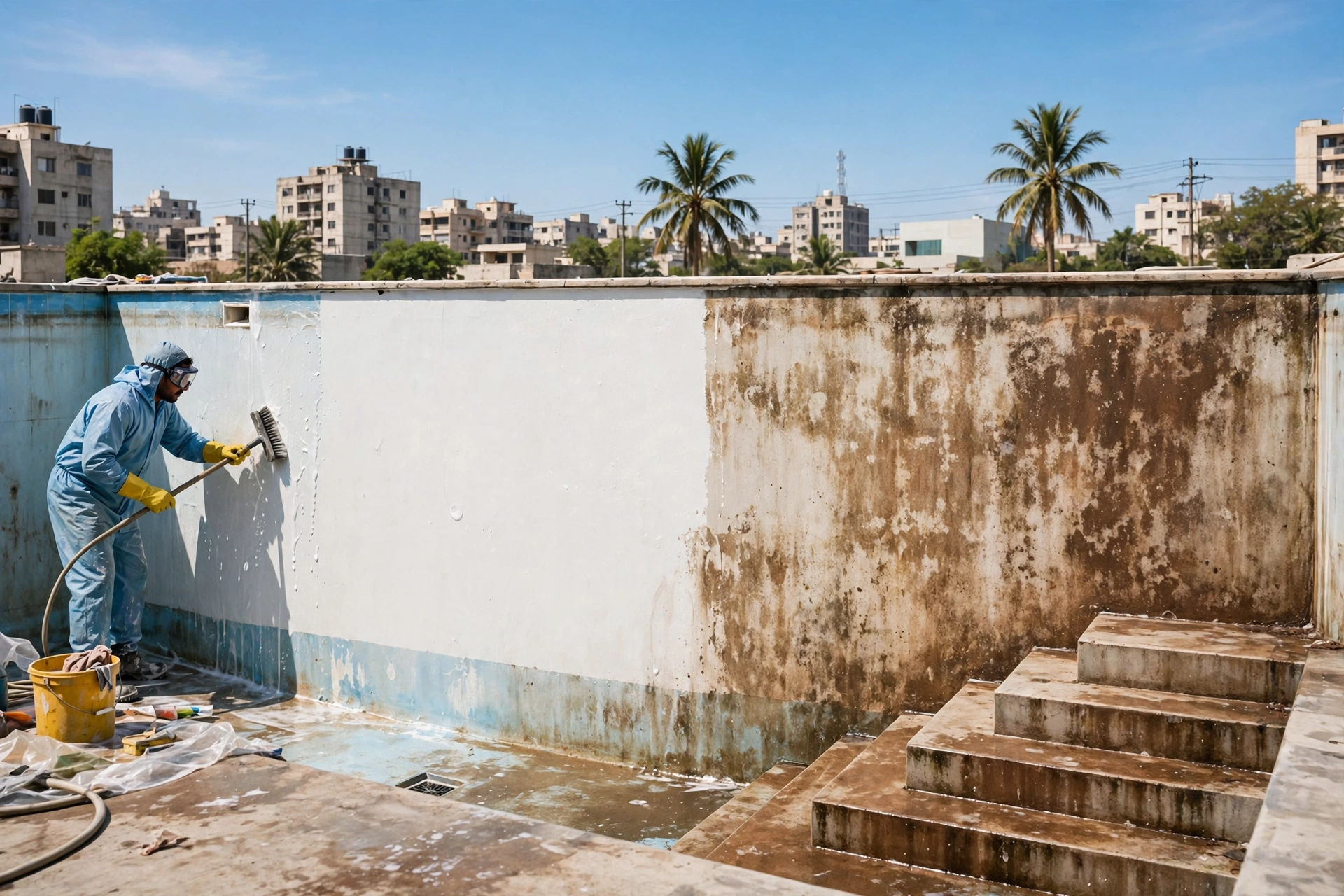
After a few Karachi summers, many pool owners notice the same thing: the water is balanced, the filter runs fine, yet the pool walls look tired. Brown streaks below the waterline, grey patches on the steps, a yellowish tint that no amount of brushing shifts. In most cases the problem is not the water — it is the plaster surface itself, and the fix is a pool acid wash.
An acid wash strips a paper-thin layer off the plaster, taking years of embedded stains with it. Done properly, a dull pool comes back bright and smooth; done badly, it etches the surface. Here is how to tell whether your pool needs one, what the process involves, and what to expect on price.
What Is a Pool Acid Wash?
An acid wash uses a diluted solution of muriatic acid (hydrochloric acid) applied directly to the drained pool surface. The acid dissolves mineral deposits, algae stains, and the discoloured top layer of plaster, exposing fresh plaster underneath. It is sometimes called an acid bath or drain-and-acid-clean, and it is far stronger than normal pool chemicals — a renovation treatment, not a weekly cleaning job.
It is not a substitute for re-plastering a cracked, hollow, or peeling surface — acid only reveals such damage more clearly. But for a sound pool that simply looks stained, it is often the most cost-effective refresh, a fraction of a full pool renovation.
Signs Your Karachi Pool Needs an Acid Wash
Karachi’s hard water, long summers, and constant dust stain plaster faster than in softer-water cities. Look for these signs:
Stains that survive brushing and shock. If vigorous brushing, a shock dose, and balanced chemistry leave the same marks in place week after week, the stain is in the plaster, not on it. Brown and rust-coloured stains often come from metals in the fill water; grey and black patches are usually old algae rooted into the surface.
A rough, sandpapery feel. Run your hand over the wall below the waterline. Healthy plaster feels smooth. When scale and mineral build-up accumulate, the surface turns gritty — which also makes algae harder to brush off, a cycle that worsens each season.
Dull, uneven colour. Plaster that has yellowed or gone patchy, especially in the shallow end and on steps where sunlight and heat are strongest, is a classic acid-wash candidate. The steps and sun ledge almost always show it first.
After a long period of neglect. Pools left unmaintained through a winter, or pools bought with a house, often need an acid wash as part of the first proper service — before any new maintenance routine can keep the water genuinely clear.
If your pool has only light surface dirt, a good deep clean and water-balance correction will do. Acid is for stains that are part of the surface itself.
What an Acid Wash Removes — and What It Cannot Fix
An acid wash is very good at removing mineral scale and calcium deposits from Karachi’s hard water, rust and metal stains from fill water or old fittings, embedded algae stains including black algae marks that brushing cannot reach, and general yellowing of aged plaster.
It cannot fix cracks, hollow spots, or plaster lifting from the shell — those need repair or re-plastering. It is not for fibreglass or vinyl pools, which need different treatments, and it does not fix leaks. A reputable contractor inspects the plaster first; anyone offering a wash without draining and checking the surface should be avoided.
The Acid Wash Process, Step by Step
A professional acid wash in Karachi typically takes one to two days, plus refill:
1. Drain and inspect. The pool is drained completely and the surface inspected in daylight. Cracks, hollow patches, and damaged fittings are marked, and the pump, lights, and fittings are protected or removed where needed.
2. Pre-clean. Loose dirt and debris are removed and the surface hosed down. Remaining algae is brushed off so the acid works on the plaster, not on a layer of dirt.
3. Acid application. Diluted acid is applied section by section, from the deep end upward. Timing matters: leave it too long and the plaster etches unevenly; wash it off too soon and the stain stays.
4. Scrub and neutralise. Each section is scrubbed, then the acid is neutralised with a soda-ash solution and rinsed thoroughly. This step is critical — acid left in the plaster or plumbing will damage both and throw off water chemistry for weeks.
5. Rinse, inspect, refill. The pool is rinsed again, inspected, and only then refilled. Filling a Karachi pool takes a large volume of water — plan tanker or mains supply in advance, and budget for it separately from the wash itself.
6. Rebalance and restart. Fresh water is balanced (pH, alkalinity, chlorine), the filter is run, and the pool is checked over the first few days, when the new surface is most vulnerable to staining.
Safety: Why This Is Not a DIY Job
Muriatic acid is hazardous. It burns skin and eyes, its fumes damage lungs, and a spill on decking, plants, or metal fittings causes real damage. Professional crews work in full protective gear, control runoff so acid does not reach gardens or drains, and neutralise waste water before disposal.
There is also a technical limit: each wash removes a thin layer, so plaster can only be washed a limited number of times. A pool washed yearly for a decade may be too thin to wash again. For most Karachi pools, once every three to five years is plenty.
How Much Does a Pool Acid Wash Cost in Karachi?
We do not quote a fixed price without seeing the pool — size, stain severity, and access change the job completely:
| Factor | How it affects cost |
|---|---|
| Pool size and depth | More surface area means more acid, labour, and refill water |
| Stain severity | Heavy scale or black algae needs more passes and time |
| Plaster condition | Thin or damaged plaster needs a gentler, slower approach |
| Access and drainage | Where the drained water can safely go matters |
| Refill water | Tanker or mains water is usually billed separately |
Expect a proper quote to give a single figure for the wash, a clear note on whether refill water is included, and a condition report on the plaster. If a quote seems suspiciously cheap, ask what is missing — usually the neutralising step, protection of fittings, or the aftercare visit.
After the Wash: Keeping the Plaster Bright
A wash resets the clock, but Karachi water will stain a pool again if the routine slips. Keep pH balanced and test weekly, brush the waterline weekly, and use a metal sequestrant if your fill water is high in metals. Fix a struggling filter promptly — fine debris left in the water settles and stains. With that routine, most pools hold their brightness for years. Our maintenance plans start from Rs 15,000/month, final quote after a free pool inspection.
Acid Wash vs Re-plastering vs Regular Cleaning
| Option | Best for | Rough scale of work |
|---|---|---|
| Regular deep clean | Surface dirt, light algae | A few hours, no draining |
| Acid wash | Embedded stains on sound plaster | 1–2 days plus refill |
| Re-plastering | Cracked, hollow, or thin plaster | A full renovation project |
Choosing wrong wastes money both ways: acid on failing plaster buys a few months at best, while re-plastering a pool that only needed a wash throws away years of surface life. That is why inspection comes first. See finished work in our gallery.
Frequently Asked Questions
How often should a pool be acid washed?
Every three to five years for most Karachi pools, only when stains are embedded in the plaster. Annual washing thins plaster unnecessarily.
Can an acid wash damage my pool?
Yes, if done carelessly — over-long contact etches plaster unevenly, and un-neutralised acid damages fittings and plumbing. It needs an experienced crew and proper neutralisation.
How long does the pool stay out of use?
Usually three to five days: one to two days for the wash, then refill and rebalancing. Confirm the refill schedule before draining.
Is an acid wash safe for fibreglass pools?
No — it is a plaster-pool treatment. Fibreglass gel coat and vinyl liners need different methods, and acid can damage them permanently.
Will stains come back after an acid wash?
They can, if the cause is not fixed: scale returns when pH runs high, metal stains when fill water is untreated. Water balance and routine maintenance keep them away.
Get a Free Quote
If your pool walls look stained no matter how well you clean, an acid wash may be the reset it needs — or the inspection may show something else entirely. Either way, you get an honest answer before spending anything.
The Pool Guy inspects, acid-washes, and re-plasters pools across DHA, Clifton, Gulshan, Bahria Town, and PECHS. Call or WhatsApp +92 321 2077638, or visit 22 Dr Ziauddin Ahmed Rd, Civil Lines, Karachi. Open Monday to Saturday, 9 AM to 6 PM (Sunday closed). Request a free pool inspection and we will tell you whether your pool needs a wash, a clean, or a renovation — final quote after inspection.
Leave a Reply