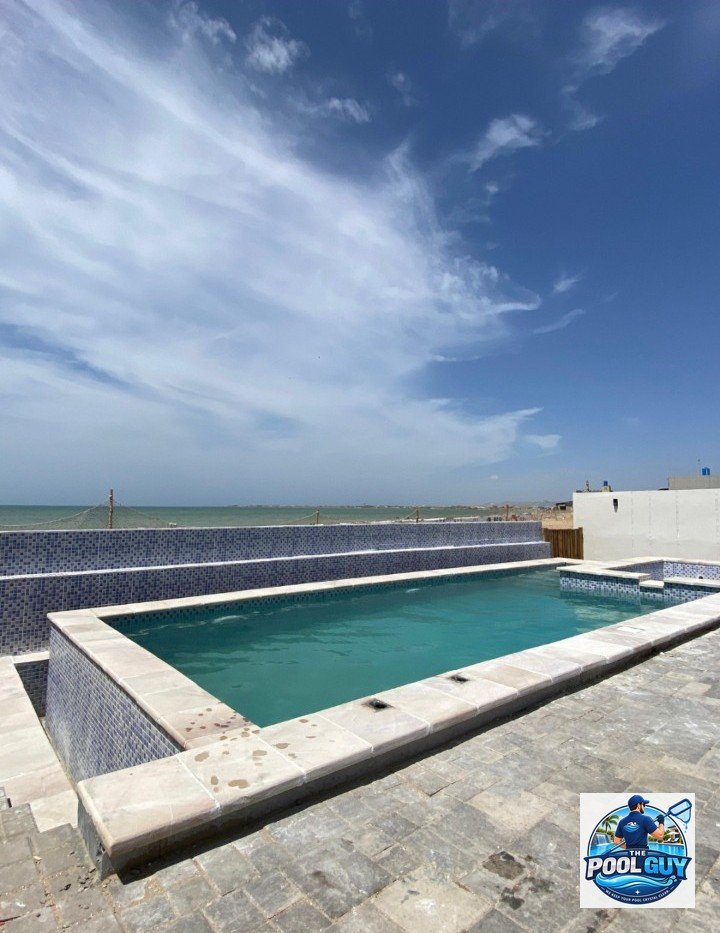
Building a pool at your farmhouse outside Karachi is a different job from building one in DHA or Clifton. The land is cheaper, the plot is bigger — and the logistics are harder. I've built pools on farmhouse properties along Malir, Gadap, the Superhighway belt and DHA Phase 8 farm areas, and the projects that go wrong almost always go wrong on the same six things: water, power, access, soil, security of the site, and monsoon drainage. Get those six right and a farmhouse pool is one of the most satisfying builds you'll own — space is unlimited, noise is zero, and the night sky over a lit pool outside the city is worth every rupee.
This guide is written from first-hand contractor experience for Karachi farmhouse owners. It covers real costs in rupees, the water and power realities nobody warns you about, and the mistakes that turn a farmhouse pool into a five-million-rupee regret.
How farmhouse pool construction differs from a city pool
The biggest difference is infrastructure you don't have. In DHA, a city pool connects to municipal water, K-Electric power with relatively stable supply, and a road that a concrete transit mixer can reach. On a farmhouse plot off the Malir River bed or past Gadap town:
- Water comes from your own bore or tanker. Municipal lines don't reach most farmhouse zones. Your pool needs a bore of sufficient yield or a standing tanker arrangement.
- Power may be shared or solar. Many farmhouses run on a mix of K-Electric, generator, and increasingly solar. Your pump and chlorinator schedule must fit the power reality, not a brochure schedule.
- Access decides your construction method. If a transit mixer and an excavator can't reach the site, you pour by hand or pump concrete — both cost more and need tighter supervision.
- Soil is inconsistent. Farmhouse land along river beds can be loose alluvium; Gadap side can be rocky. Both need proper testing before steel and concrete go in.
- Nobody lives there. The site is unoccupied most of the week, which changes theft-proofing, cover strategy, and how you schedule maintenance.
If you own a farmhouse plot, your pool needs the full treatment: a bore drilled and tested before construction, equipment sized for your actual power supply, and a monsoon drainage design — not just “the lawn slopes away.”
Real farmhouse pool costs in Karachi (2026 contractor pricing)
Honest numbers first. A standard farmhouse pool — say 35 × 16 feet, 4–5 feet deep, reinforced concrete shell, tile finish, full equipment (pump, sand filter, chlorinator, lights, ladder, drains) — runs Rs 28–42 lakh depending on finish level and site logistics. A modest 30 × 14-foot pool on an accessible site can land near Rs 24–26 lakh; infinity edges, beach entries and premium glass tiles push past Rs 45 lakh.
What moves the number:
| Cost driver | Effect on price |
|---|---|
| Standard site (road access, good soil) | Base quote |
| Hand-poured concrete (no mixer access) | +8–12% on structure cost |
| Rocky soil / deep excavation | +Rs 1.5–3 lakh |
| Overflow channel / perimeter detail | +Rs 2–4 lakh |
| Infinity edge on a farmhouse slope | +Rs 4–7 lakh |
| Bore not yet drilled (tankers only) | ongoing running cost, not one-time |
| Glass tile finish vs standard ceramic | +Rs 3–6 lakh |
Never accept a quote that isn't itemized. A farmhouse quote must show the bore/water arrangement, the access plan, and the drainage design as separate lines — if they're missing, the contractor hasn't actually thought about your site.
Water: the make-or-break decision
A pool loses roughly 2–4 cm of water per week to evaporation in Karachi's summer — more on a farmhouse with open wind exposure. Your water plan must cover the initial fill (~200,000 litres for a 35 × 16-foot pool) plus continuous top-up.
Bore: The right answer for most farmhouses. Drill before construction and test yield and water quality — high iron stains tiles and needs treatment before the pool fills. A bore typically costs Rs 2.5–4 lakh depending on depth.
Tankers: Filling a full pool by tanker costs Rs 15,000–25,000+ and is a coordination headache on rural roads. As a backup for top-ups it's fine; as your only water source, the running cost and hassle add up fast.
My standing advice: drill and test the bore before you sign the pool contract. If the bore can't support the pool, the whole project economics change, and you want to know that before the excavation starts.
Power: sizing equipment for farmhouse reality
Pool equipment needs its daily filtration hours, whatever your power situation. The practical farmhouse setup:
- A variable-speed pump (60–70% electricity saving vs single-speed — critical where every kWh comes from a generator or solar bank). See our variable-speed pump savings breakdown for the payback math.
- Equipment sized so the full turnover fits the hours you know you have power — not a theoretical 24-hour schedule.
- Salt chlorination where the family visits weekly (more forgiving of gaps than manual chlorine dosing).
If you're on solar, talk to the pool contractor and the solar installer together before either designs their system. A 1.5 HP pump drawing 1.1 kW for 8 hours is 8.8 kWh/day — that has to be in the solar plan, not discovered after both systems are built.
The six farmhouse mistakes I see most
1. No drainage plan for monsoon. Farmhouse land is flat and often sits near drainage paths. A downpour can flood the deck with muddy runoff — and groundwater can float an empty pool shell right out of the ground. Every farmhouse pool needs a perimeter drainage design and a hydrostatic relief plan. See our monsoon pool care guide for what floodwater does to chemistry.
2. Waterproofing treated as optional. Rural construction crews sometimes treat waterproofing as a luxury line item. On farmhouse soil with variable water tables it is the cheapest insurance on the job — our full breakdown of pool waterproofing mistakes in Karachi applies double here.
3. Equipment room in a flood zone. The pump room placed at the lowest corner of the plot floods in the first heavy rain and kills the pump. Put equipment on raised ground with proper drainage, always.
4. No pool cover for the absent week. A farmhouse pool you visit on weekends accumulates a full week of dust, leaves and evaporation between visits. A proper cover cuts chemical costs and cleaning time dramatically, and helps with heating in winter — see pool heating options in Pakistan.
5. Lighting as an afterthought. Farmhouses get genuinely dark — no streetlights, no neighbour glow. LED lighting isn't decorative here, it's what makes the pool usable and safe after sunset. Plan it in the shell stage, not after the plaster is done. Our LED pool lighting guide covers options and costs.
6. No maintenance plan for an unoccupied property. A pool without a weekly maintenance visit degrades — algae takes hold, equipment runs dry, tiles stain. Our maintenance plans start from Rs 15,000/month (final quote after we see your pool), and for a farmhouse the weekly visit is non-negotiable if the family is away most days.
Design choices that suit farmhouse plots
Farmhouse land gives you room a city plot can't:
- Larger freeform or L-shaped designs — space lets the pool breathe; rectangular boxes look undersized on a two-acre plot.
- Beach entries and sun shelves — easy on flat land, popular with families who bring kids and elders.
- Perimeter overflow channels — the mirror-flat water effect suits big open sites; needs a separate balance tank and careful levelling.
A realistic farmhouse pool timeline
On a prepared site with water and power arranged: excavation and steel (2–3 weeks), shell and waterproofing (3–4 weeks), tiling and coping (3–4 weeks), equipment and commissioning (2–3 weeks), chemical balancing (1 week). Total: 10–14 weeks — plus 2–4 weeks if the bore isn't drilled or monsoon hits mid-build.
Frequently asked questions
Can I build a pool on farmhouse land without a bore?
You can, on tankers — but budget for it. Filling is a one-time tanker operation of Rs 15,000–25,000+, and summer top-ups mean a standing tanker relationship. For most owners, a bore pays for itself within a year or two.
How much does a farmhouse pool cost in Karachi in 2026?
Rs 28–42 lakh for a standard 35 × 16-foot reinforced concrete pool with tile finish and full equipment. Modest builds start near Rs 24 lakh; infinity edges and glass tiles push past Rs 45 lakh.
Is soil testing really needed on farmhouse land?
Yes — this is where it matters most. River-bed alluvium and rocky Gadap soil need different structural designs, and a cheap soil test decides which one.
What maintenance does an unoccupied farmhouse pool need?
A weekly visit minimum: chemistry check, skimmer and pump basket cleaning, water top-up, equipment inspection. Our plans start from Rs 15,000/month, final quote after we inspect your pool.
Can the pool run on solar?
Yes, and farmhouses are the best case for it — space for panels, and the pump's daytime hours match solar production. Size the array for the pump plus chlorinator, and use a variable-speed pump to keep the load down.
Get a farmhouse pool quote from The Pool Guy
We build, renovate and maintain swimming pools across Karachi — city and farmhouse, residential and commercial. For a farmhouse project, we start with a site visit: soil, water, power, access and drainage, then an itemized quote. No generic price lists, no pressure.
📞 Call / WhatsApp: +92 321 2077638 (Mon–Sat, 9 AM–6 PM, Sunday closed)
📍 22 Dr Ziauddin Ahmed Rd, Civil Lines, Karachi
⭐ 5.0 rated on Google — leave us a review
Browse our services, see real work in the gallery, or read our pool construction cost guide for city-pool pricing comparison.
Leave a Reply