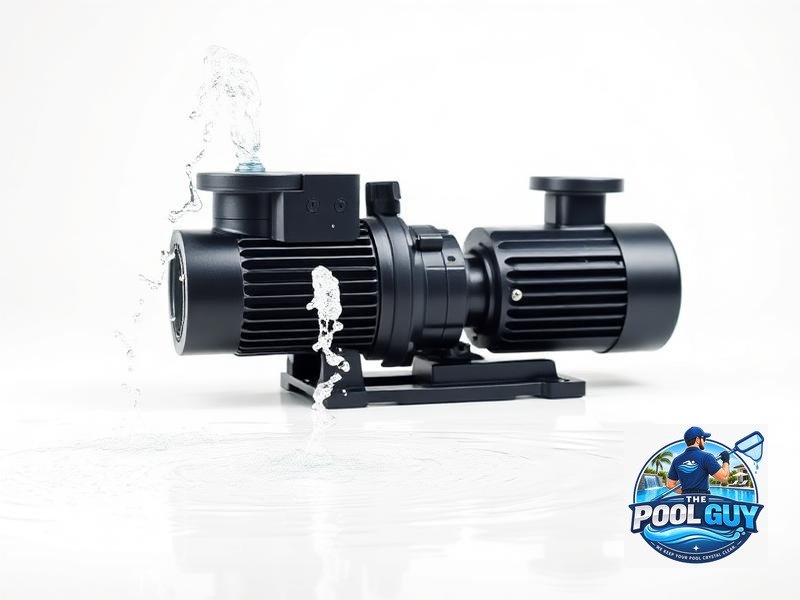
If you own a swimming pool in Karachi, your pool pump is very likely the second biggest electricity load in your house after air conditioning — and you probably never calculated exactly how much it costs you every month. As a pool contractor, I get asked constantly whether upgrading to a variable-speed (inverter) pool pump is worth the extra money. So instead of the usual brochure claims, here is the actual payback math, worked out against K-Electric's 2026 residential tariffs, with honest installed pricing in rupees. Check it against your own bill — the numbers will hold up.
Short answer: for most Karachi residential pools running a normal filtration schedule, a variable-speed pump pays for itself in roughly 16 to 24 months, and then keeps saving you Rs 6,000–8,000 every month for the rest of its life. But there are homes where it does NOT make sense, and I will tell you exactly which ones at the end.
The payback math: what your pump really costs on a K-Electric bill
K-Electric bills residential customers on a slab system, and this is the key detail most articles miss: your pool pump's electricity is charged at your marginal slab, not at some average rate. A house with a swimming pool in DHA, Clifton, Gulshan or Bahria Town is practically never sitting in the cheap slabs. Between the house, the ACs and the pool, these homes land at 400–700+ units a month, where 2026 NEPRA-approved rates are Rs 38.95–41.85 per kWh — and above 700 units it is Rs 47.20 per kWh (plus FCA, QTA, taxes and fixed charges on top).
So when you add a pool pump, you are not adding cheap units to your bill. You are adding the most expensive units on your bill. That is precisely why the savings from a variable-speed pump are bigger in Karachi than in the manufacturer's marketing material, which is usually calculated at a flat American rate.
Now the consumption. A typical 1 HP single-speed pool pump — the workhorse we see in most Karachi pump rooms — actually draws about 1.1 kW from the wall (nameplate says 0.75 kW of shaft output, but motor losses push real draw higher). Run it a standard 8 hours a day for proper turnover:
- 1.1 kW × 8 hours = 8.8 kWh per day
- 8.8 × 30 = 264 kWh per month
- 264 × Rs 38.95 (a realistic marginal slab for a pool household) = ≈ Rs 10,283 per month just for the pump
Read that again. Over ten thousand rupees a month, every month, for filtration alone. In summer, when you run the pump longer and sit in a higher slab, it is worse.
A variable-speed pump does not change the laws of physics — it uses them. Pump power follows the affinity law: power consumption is proportional to the *cube* of motor speed. Drop the speed to half, and power draw drops to one-eighth. You do not need full blast for 8 hours. You need high speed for skimming and backwashing, and gentle flow for the rest of the turnover. A realistic VS schedule for a Karachi residential pool:
- 2 hours at high speed (skimming, feeding the salt chlorinator, proper filtration): ~1.0 kW × 2 = 2.0 kWh
- 6 hours at low speed (half RPM, quiet circulation and chemical mixing): ~0.125 kW × 6 = 0.75 kWh
- Total: 2.75 kWh per day vs 8.8 kWh on the single-speed
At 82.5 kWh a month on the same Rs 38.95 marginal slab, the pump now costs ≈ Rs 3,213 per month. Monthly saving: ≈ Rs 7,070. Annual saving: ≈ Rs 84,800. And in the peak summer months, when your slab is higher and run hours are longer, the saving is bigger still.
Single-speed vs variable-speed: the daily consumption table
Here is the side-by-side comparison with the assumptions stated plainly, so you can rework it for your own pool:
| Single-speed 1 HP pump | Variable-speed 1.5 HP pump | |
|---|---|---|
| Real power draw | ~1.1 kW, constant | 1.0 kW (high) / 0.125 kW (low) |
| Typical daily schedule | 8 hrs full speed | 2 hrs high + 6 hrs low |
| Daily consumption | 8.8 kWh | 2.75 kWh |
| Monthly consumption | 264 kWh | 82.5 kWh |
| Monthly cost at Rs 38.95/kWh marginal slab | ≈ Rs 10,283 | ≈ Rs 3,213 |
| Monthly saving | — | ≈ Rs 7,070 |
| Annual saving | — | ≈ Rs 84,800 |
| Typical noise | 65–70 dB (neighbours hear it) | 45–55 dB on low (conversation level) |
Assumptions: 30-day month, NEPRA 2026 unprotected residential marginal slab of Rs 38.95/kWh (401–500 units). Your actual marginal slab depends on total household consumption — check your own bill's slab breakdown. If you are above 700 units, use Rs 47.20 and the savings get even larger.
The payback: a quality inverter variable-speed pump installed in Karachi costs roughly Rs 160,000–220,000 (genuine imported unit plus proper installation), while a straight replacement single-speed pump is Rs 45,000–70,000. The upgrade premium is therefore around Rs 110,000–150,000. Divide that by ~Rs 84,800 a year of savings and you get a payback of 16–21 months at a full 8-hour schedule. After that, the savings are pure profit for the remaining 8–10 years of the pump's life — comfortably Rs 6–8 lakh over its lifetime.
Why the savings are bigger in Karachi than the brochures say
Three Karachi-specific factors make variable-speed pumps more valuable here than anywhere the brochures were written for:
1. The slab system punishes wasteful loads. As explained above, the pump's units are your most expensive units. Every kWh you eliminate comes off the top slab. In countries with flat tariffs this effect does not exist.
2. Load-shedding and inverters. A single-speed pump's hard start pulls a surge that trips small inverters and UPS systems. A variable-speed pump ramps up softly, and on low speed it draws barely 125 watts — little more than a couple of ceiling fans. During load-shedding, a VS pump on low speed can keep circulating off a modest home inverter, which means your water does not go stagnant and green during a long outage. In Karachi, that alone is worth real money in avoided green-pool cleanups.
3. Voltage fluctuations. Karachi's grid is not kind to motors. VS pumps include their own drives, but cheap imported units die young here without a voltage guard or surge protector. Budget Rs 8,000–12,000 for proper electrical protection at installation — any contractor who skips this in Karachi is setting you up for a dead drive board in the second summer.
Getting the sizing right: HP, flow, turnover and the 50 Hz warning
Buying the wrong pump wastes the entire investment, so the trade details matter:
- Pool volume: Most Karachi residential pools we build are 25,000–40,000 litres (a typical 30×15 ft pool, 4–5 ft deep). You need roughly one full turnover per 6–8 hours of filtration. That means a sustained flow of only 3–5 cubic metres per hour does the job — easily within a VS pump's low-speed range.
- HP rating: A 1–1.5 HP variable-speed pump covers virtually every residential pool in Karachi. Oversizing is a classic mistake; a 3 HP monster on a 30,000-litre pool is just an expensive way to waste electricity and blast your filter media.
- Filter and chlorinator compatibility: Your existing sand filter works fine with a VS pump as long as low-speed flow stays above the minimum your salt chlorinator needs (usually 4–6 m³/hr for common Emaux cells). We verify this at commissioning — if flow is too low on the slowest setting, we raise the low-speed setpoint slightly. Our equipment services cover pump sizing and chlorinator matching.
- The 50 Hz warning — this one is critical: Pakistan runs on 50 Hz mains. A lot of variable-speed pumps sold online are American 60 Hz models; on 50 Hz they run ~17% slower, deliver less flow than rated, and the electronics can be unreliable. Only buy pumps explicitly rated for 220–240V / 50 Hz. If a dealer cannot show you the rating plate, walk away.
What a variable-speed pool pump costs in Karachi (honest pricing)
No fake “starting from” games — here are the realistic installed ranges we see in the Karachi market in 2026:
- Standard 1 HP single-speed pump (reputable brand, installed): Rs 45,000–70,000
- Inverter/variable-speed pump 1–1.5 HP, 50 Hz rated (genuine imported unit, installed with voltage protection): Rs 160,000–220,000
- Premium VS pump with automation/app control: Rs 230,000+
- Installation and commissioning (plumbing adaptation, electrical protection, programming the schedule): typically Rs 15,000–25,000 of the above
Prices move with the dollar, so treat these as ranges, not quotes. What I will not do is quote you below cost to win the job and then disappear — that is how pools end up with counterfeit pumps. You can see our other installed equipment on the /products/ page and completed pump-room work in the /gallery/.
When the upgrade is NOT worth it
Honest advice, because a contractor who tells you when *not* to spend is one you can trust with the Rs 30-lakh projects:
- Your pump runs under 4 hours a day. Small plunge pools or rarely used pools that genuinely only need short filtration cycles do not burn enough electricity for the premium to pay back quickly. A simple timer on your existing pump is the smarter buy.
- Your pump is new. If your single-speed pump is under 3 years old and healthy, run it until it needs replacement, then switch. Do not scrap a good pump early.
- You are already on solar with surplus generation. If your daytime generation covers the pump, the marginal cost is near zero and payback stretches out (though VS still helps on cloudy days and at night on battery).
- Your plumbing is badly undersized. Tiny pipes mean high head, and a VS pump cannot cheat physics — if the hydraulic losses force high speed anyway, you get little saving. Fix the plumbing first.
FAQs
Will a variable-speed pump work with my existing sand filter?
Yes, in almost all cases. Sand filters actually work *better* with VS pumps because slower water velocity means finer filtration and less channeling through the sand bed. The one thing to check is minimum flow for your salt chlorinator — we set the low-speed program to stay above it.
Can a variable-speed pump run during load-shedding on my home inverter?
On low speed, yes — it draws roughly 100–150 watts, which a 1–2 kW home inverter handles easily. On high speed it will not; that is why we program the schedule so the low-speed circulation block covers the hours when outages are most likely.
Do I need to change my pool plumbing to install one?
Usually not. Most VS pumps are dimensionally close to standard single-speed pumps, and we adapt the unions at installation. If your pump room in DHA/Clifton/Bahria is tight (many are), we measure before ordering — a site visit takes 20 minutes and avoids an expensive surprise.
How long does a variable-speed pump last in Karachi conditions?
8–12 years for a quality unit, provided it has voltage protection and the drive is ventilated. The most common cause of early death we see is heat plus voltage spikes in an unprotected pump room, not the pump itself.
Wouldn't just running my single-speed pump fewer hours save the same money?
Partially, but you sacrifice turnover and chemical mixing — the two things that keep water clear. Short-run single-speed schedules are the number-one cause of the green pools we get called to fix every monsoon. A VS pump gives you the savings *and* the turnover.
The bottom line — and what to do next
For a typical Karachi residential pool on a normal filtration schedule, the upgrade math is not close: roughly Rs 7,000 saved every month, payback in under two years, then years of pure saving — plus quieter operation, inverter-friendly low-speed runs during load-shedding, and better filtration. The exceptions are small lightly-used pools, brand-new single-speed pumps, and solar-covered setups.
If you want the numbers worked out for your specific pool — your volume, your current pump, your actual K-Electric slab — call The Pool Guy on +92 321 2077638. We will size the pump properly, confirm 50 Hz compatibility, install voltage protection, and program the schedule so you see the saving on your next bill. We are at 22 Dr Ziauddin Ahmed Rd, Civil Lines, Karachi, open Mon–Sat, 9 AM–6 PM (closed Sundays). Browse our equipment services, see finished pump rooms in the /gallery/, and check current equipment options on /products/.
Leave a Reply