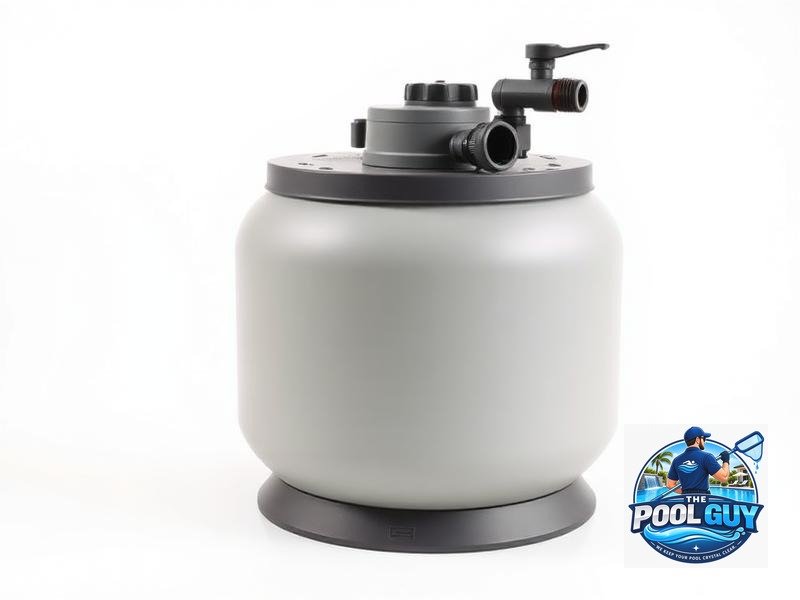
In Pakistan, pool equipment is sold, not sized. Dealers on WhatsApp quote “1.5 HP, 24-inch filter, done” without asking how big your pool is or what your house wiring looks like. I've opened more pump rooms than I can count where the pump was twice the size needed, the filter was choking on the flow, and nobody had installed a stabilizer — and the owner paid a fat KE bill every month for equipment quietly destroying itself.
This is how I actually size equipment for homes in DHA, Clifton, Gulshan and Bahria Town: the turnover math, which filter survives Karachi's dusty monsoon water, what load-shedding does to motors, and honest 2026 pricing in rupees.
One Number Decides Everything: The Turnover Rate
Your equipment answers to a single number — the turnover rate: how many hours to push your pool's entire volume through the filter. The residential standard is one full turnover in 6–8 hours. Slower, and Karachi's dust settles into dead spots. Faster, and you're paying KE for nothing.
How much water is in your pool? Take the classic Karachi bungalow pool — 30 × 15 ft, sloping 3 ft to 6 ft deep:
- Average depth: (3 + 6) ÷ 2 = 4.5 ft
- Volume: 30 × 15 × 4.5 = 2,025 cu ft ≈ 15,150 gallons
- 8-hour turnover: 15,150 ÷ 8 ≈ 32 GPM
- 6-hour turnover: 15,150 ÷ 6 ≈ 42 GPM
Your system needs to move roughly 30–45 GPM comfortably. That figure sets your pump's working range — and leads straight to the most common Karachi mistake: buying the biggest pump in the shop.
Pump Sizing: Bigger Is Almost Always Wrong
Roughly: 1 HP ≈ 40–60 GPM, 1.5 HP ≈ 60–80 GPM, 2 HP ≈ 80–110 GPM. Against a 30–45 GPM target, 1.5 HP is the sweet spot for a 30×15 ft pool — mid-range, no strain, headroom for a filter getting dirty between backwashes.
An oversized pump costs you three ways. Electricity: a 2 HP pump can draw near 2 kW; the gap versus a right-sized pump is several thousand rupees on the KE bill, every month, for the pool's life. Filter channelling: push water through sand faster than its rated flow and the water carves paths instead of spreading — your return water isn't filtered at all. Plumbing damage: excess velocity erodes fittings, and the pump cavitates — that violent rumbling — eating impellers and seals. I've replaced two-year-old impellers in oversized-pump pools.
Only these pools need 2 HP or more: over 40 ft long, infinity edges, attached spas with strong jets, or long pipe runs from a distant pump room. A 3 HP pump on a standard 25×12 ft Gulshan pool is pure overkill.
| Pool size | Volume (approx) | Pump | Notes |
|---|---|---|---|
| 20 × 10 × 4–5 ft | ~7,500 gal | 1 HP | Small backyard / farmhouse pools |
| 25 × 12 × 3–6 ft | ~10,500 gal | 1–1.5 HP | Most common Karachi residential size |
| 30 × 15 × 3–6 ft | ~15,000 gal | 1.5 HP | The Karachi bungalow standard |
| 40 × 20 × 3–7 ft | ~28,000 gal | 2 HP | Large villas, clubs |
| Infinity edge / spa combo | add 30–40% | 2–3 HP | Separate lines for edge + jets |
One local electrical reality: many Karachi homes have only single-phase (220V) supply, while pumps above 2 HP are commonly sold in 3-phase. If your house is single-phase, buy a single-phase model or budget for a phase converter — don't discover this on installation day.
Sand vs Cartridge vs DE: Which Filter Survives Karachi?
Sea-breeze dust, pre-monsoon dust storms, monsoon debris, bore-water solids — Karachi filters work harder than in most cities.
- Sand filters are the Karachi default. A 24–27 inch tank needs a 2-minute backwash every 1–2 weeks (weekly in monsoon), and the sand lasts 5–7 years. Size the filter to the pump's actual flow, then go one size bigger: a 1.5 HP pump pushing ~70 GPM max deserves a 27-inch sand filter (~90 GPM rated). The dust storms demand that breathing room.
- Cartridge filters filter finer with no backwash water wasted — but Karachi's dust clogs them fast: hose-down every 2–3 weeks, replacement cartridges every 2–3 years at real money. Good for rooftop or indoor pools, not ground-level garden pools in DHA or Bahria.
- DE filters give the finest clarity but are fussy and expensive. I almost never specify them for Karachi homes.
My rule: ground-level pool → oversized sand filter; rooftop/indoor → cartridge; DE only if you want competition-level clarity and will pay for the upkeep.
Chlorinators and Salt Systems: Size to Your Water
An inline chlorinator is the simple workhorse — a sealed vessel loaded with 3-inch chlorine tablets. Standard 9-lb models suit pools up to ~25,000 gallons, covering virtually every Karachi home pool. One rule: never put tablets directly in the skimmer — the concentrated acid damages pump seals and voids warranties.
Salt systems generate chlorine from dissolved salt — softer water, steadier levels, no tablet hauling. Buy a cell rated for 1.5× your actual pool volume, because 35–40°C June water devours chlorine. For our 15,000-gallon example, get a cell rated 20,000–25,000 gallons. Karachi caveat: salt accelerates corrosion on cheap metal fittings, ladders and heaters — insist on corrosion-resistant hardware, or pay for a refit later.
The Forgotten Equipment: Pipes, Valves and the Stabilizer
Half the "equipment problems" I investigate are plumbing problems. Use 2-inch pipe for main lines on anything 1.5 HP and up — 1.5-inch belongs only on small pools. Every unnecessary 90° elbow costs you GPM in friction loss. And fit isolation and drain valves on every line, so routine service doesn't flood the pump room.
Then the one item nobody budgets for: the voltage stabilizer. Karachi's grid swings — low voltage on summer evenings, surges when load-shedding ends — and pump motors die from it first. A dedicated stabilizer for the pump circuit is non-negotiable. As for UPS backup: a 1.5 HP pump pulls ~1.5 kW continuous, so a UPS that runs it for hours would cost more than the equipment itself. The right move is a timer — schedule your 8 hours of filtration around load-shedding windows instead of stopping and restarting mid-cycle.
Honest 2026 Karachi Pricing
Prices move with the dollar — treat these as 2026 market ranges (equipment + typical installation), not fixed quotes:
- 1.5 HP branded pump: Rs 95,000 – Rs 150,000
- 27-inch sand filter + sand + valve: Rs 90,000 – Rs 160,000
- Cartridge filter (equivalent): Rs 130,000 – Rs 220,000
- Inline chlorinator: Rs 25,000 – Rs 55,000
- Salt system (1.5× pool rating): Rs 180,000 – Rs 350,000
- Voltage stabilizer (pump circuit): Rs 15,000 – Rs 30,000
- Pipes, valves, skimmer, fittings: Rs 30,000 – Rs 60,000
- Full package, installed (30×15 ft pool): roughly Rs 350,000 – Rs 550,000
Beware quotes far below this range — that's a no-name pump that dies in two summers, or someone skipping the stabilizer and proper valves.
5 Sizing Mistakes That Cost Real Money
- Oversized pump, undersized filter — high KE bills, channelled sand, eroded fittings, all at once.
- Buying on WhatsApp price alone — no turnover math, no phase check, no site measurement. The cheapest quote is missing something expensive.
- No stabilizer — the first long voltage dip of June fries the motor; a Rs 100,000+ pump destroyed to save Rs 20,000.
- Salt system with cheap hardware — corroded ladders and fittings within two seasons wipe out the chlorine savings.
- Ignoring the ten-year cost — an oversized 2 HP pump adds thousands to the KE bill monthly versus a right-sized 1.5 HP. Size for the decade, not the invoice.
For keeping equipment running economically, see our pool services, browse completed work in our gallery, and check equipment options on our products page.
FAQs
How long should I run my pool pump daily in Karachi?
Eight hours in summer (May–September) for one full turnover; 4–6 hours in winter. Time it around your area's load-shedding schedule — and never let the pump sit idle for days, because stagnant water greens over in Karachi heat within a week.
Can I just install a bigger pump if filtration feels weak?
The problem is almost never the pump — it's a clogged filter, blocked skimmer baskets, or a dirty sand bed. Upsizing the pump alone causes filter channelling. Diagnose first; upsize only the matched set.
Is a saltwater pool cheaper to run than a chlorine pool here?
Chemicals cost less monthly, but the cell needs replacement every 3–5 years (a six-figure item) and non-corrosion-grade hardware dies sooner. The real saving is convenience, not money. Spec the hardware properly at build time and the economics work.
Do I need 3-phase power for pool equipment?
Not for a standard home pool — everything up to 2 HP is readily available in single-phase 220V. Only large villas, infinity edges or commercial pools need 3-phase. Confirm the pump's phase before paying if your house is single-phase.
How long does pool equipment actually last?
Pumps: 8–12 years with a stabilizer (half that without). Sand: 5–7 years. Cartridges: 2–3 years. Salt cells: 3–5 years. Right-sizing plus a stabilizer is what makes these numbers real.
Get Equipment Sized Right the First Time
Pool equipment is a ten-year purchase you make in one afternoon — don't guess. Bring us your pool's dimensions or construction plan, and we'll do the turnover math, match pump to filter to plumbing, check your phase and load-shedding schedule, and quote a right-sized package at honest 2026 Karachi pricing. No oversized "premium" pumps, no skipped stabilizers, no installation-day surprises.
📞 Call or WhatsApp: +92 321 2077638
📍 22 Dr Ziauddin Ahmed Rd, Civil Lines, Karachi
🕘 Mon–Sat 9 AM–6 PM (Sunday closed)
Maintenance plans start at Rs 15,000/month. If you'd rather never think about equipment again, that's the number to beat.
Leave a Reply